
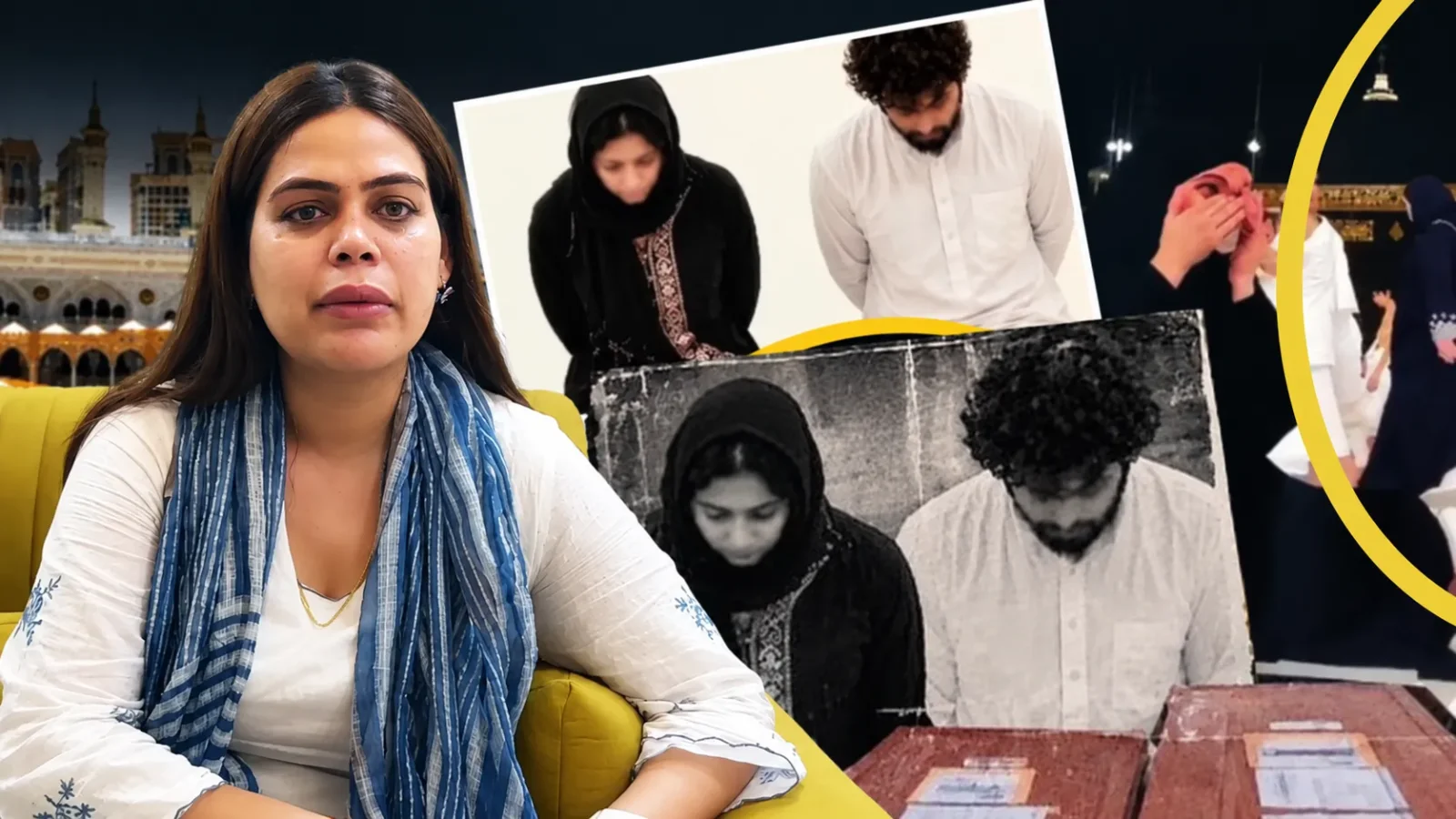
The execution of two Bangladeshi nationals in Saudi Arabia has set off an international debate, and Nazia Khan has now weighed in on it. Khan said public behaviour that is considered inappropriate has no place at a sacred site such as Mecca, but she also asked whether the punishment imposed in the case was excessively severe.
Her remarks came as claims and images linked to the executions spread widely on social media. Saudi authorities have not publicly disclosed the precise nature of the alleged act, so claims that the two were executed solely for kissing cannot be treated as established fact.
What Did Nazia Khan Say About Conduct in Mecca?
Khan stressed that visitors to a sacred place such as Mecca should respect its religious significance and the standards of conduct expected there. She objected to public displays of intimacy, arguing that such behaviour could be inconsistent with the dignity associated with a holy site.
At the same time, she raised concerns about the severity of the punishment. Her response therefore covered two distinct issues: the expectations of conduct at a sacred place, and whether a death sentence was a proportionate response in this case.
What Is Known About the Two Bangladeshi Nationals?
According to Saudi authorities, two Bangladeshi nationals, Nazrul Islam Abdul Basir and Siti Akhtar, were executed in the Mecca region on October 14, 2026, after being convicted of an "indecent act" inside a mosque. The official statement did not specify the exact conduct, the date of the alleged incident or the name of the mosque, and claims circulating on social media that the two had been executed for kissing are not confirmed by the available official information.
Their relationship has also not been conclusively established. According to statements reported by Bangladeshi media, Nazrul's father said his son was unmarried and that the woman was not his wife, so it would be inaccurate to describe them as a married or newlywed couple as an established fact.
Why Has Bangladesh Sought Details From Saudi Arabia?
The Bangladeshi government has sought further information from Saudi Arabia about the case. Bangladeshi officials said they were not informed before the executions and have requested details about the charges, the judicial proceedings and copies of the court decisions.
The case is significant because Saudi Arabia is home to a large number of Bangladeshi workers. When a citizen faces serious criminal proceedings abroad, questions about consular access, legal assistance and communication with the home government become particularly important, and several aspects of this case remain unclear pending further information and the release of judicial documents.
Why Are Viral Images of the Case Being Questioned?
After the executions, photographs and videos circulated on social media with claims that they showed the two Bangladeshis or their family members. Independent fact-checks found that some of these visuals were old and unrelated to the case.
One widely circulated photograph showed an Egyptian social media influencer and her husband, who had shared the image in 2024 while announcing their pregnancy. The episode highlights the importance of verifying images before treating them as evidence of a recent event.
What Questions Does the Case Raise on the Death Penalty?
The case has also raised broader questions about capital punishment, judicial transparency and the rights of migrant workers abroad. Saudi authorities said the sentences were imposed under ta'zir, a category of punishment in which judges have discretion to determine penalties for certain offences.
However, the full proceedings, the evidence, the details of legal representation and the written judgments have not been made publicly available in the reporting reviewed, which is why Bangladesh has sought additional information. Nazia Khan's comments form part of a wider debate about expected conduct at religious sites and the severity of punishment, and a fair assessment of the case requires confirmed information to be distinguished from allegations and the available judicial record to be examined.