
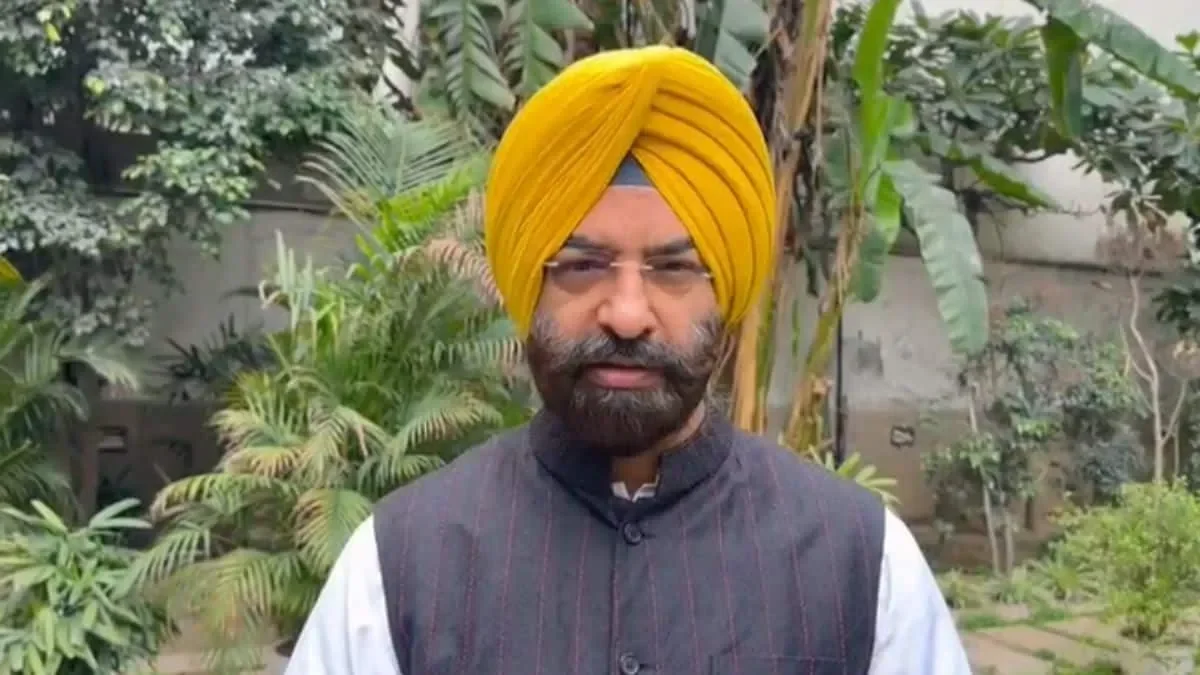
Delhi Environment Minister Manjinder Singh Sirsa on Friday appealed to residents of the National Capital Region (NCR) to join the government's efforts against rising air pollution by keeping their polluting vehicles off the roads till the Graded Response Action Plan (GRAP-1) restrictions are in place in Delhi-NCR.
Sirsa acknowledged the spike in pollution levels ahead of the winter season and said the situation was not good. Delhi's Air Quality Index (AQI) is currently around 250 and GRAP-1 restrictions are in force, but despite the curbs there has not been any significant improvement so far, with fog visible on Friday that could begin turning into smog.
What Did Sirsa Say About Two-Wheelers and PUC Certificates?
The minister appealed to Delhi residents to not take polluting vehicles out on the roads. He pointed out that two-wheelers in particular were going to petrol pumps without valid Pollution Under Control (PUC) certificates and that arguments were taking place there, adding that two-wheelers also contribute significantly to pollution and their owners should keep such vehicles off the roads during the GRAP restrictions, otherwise pollution would rise further and lead to health complications.
The Rekha Gupta government had earlier proposed a 'No PUC, No Fuel' policy, under which vehicles without valid PUC certificates will not be supplied fuel. From November 1, non-Delhi-registered vehicles that do not comply with BS-VI emission standards will also face entry restrictions, subject to applicable exemptions.
What Action Has Been Sought Against Heavy Vehicles?
Sirsa said he has spoken to the Commissioner of the Delhi Traffic Police to take immediate action against heavy vehicles still operating in the national capital amid the GRAP-1 restrictions. No such unwanted vehicles should be allowed to enter Delhi, the minister stated.
Air pollution remained a concern across Delhi-NCR on Friday, with the AQI in the poor category after Dussehra and temperatures gradually declining ahead of winter. The deteriorating air quality has renewed concerns about the health risks of prolonged exposure to polluted air.
What Did CPCB Stations Record Across Delhi?
According to data released by the Central Pollution Control Board (CPCB), several monitoring stations in the capital recorded AQI readings in the poor category. Among the highest were Pusa at 289, Punjabi Bagh at 275, Sirifort at 274, CRRI Mathura Road at 269 and Mandir Marg at 263, while Burari Crossing recorded 246, Commonwealth Sports Complex 249 and NIH Narela 241.
Delhi recorded its first poor air quality day of the season on October 21, when the AQI climbed to 245, its highest level in around 100 days. The deterioration followed Dussehra celebrations across Delhi-NCR and coincided with reports of stubble burning in neighbouring states, including Uttar Pradesh, Punjab and Haryana.