
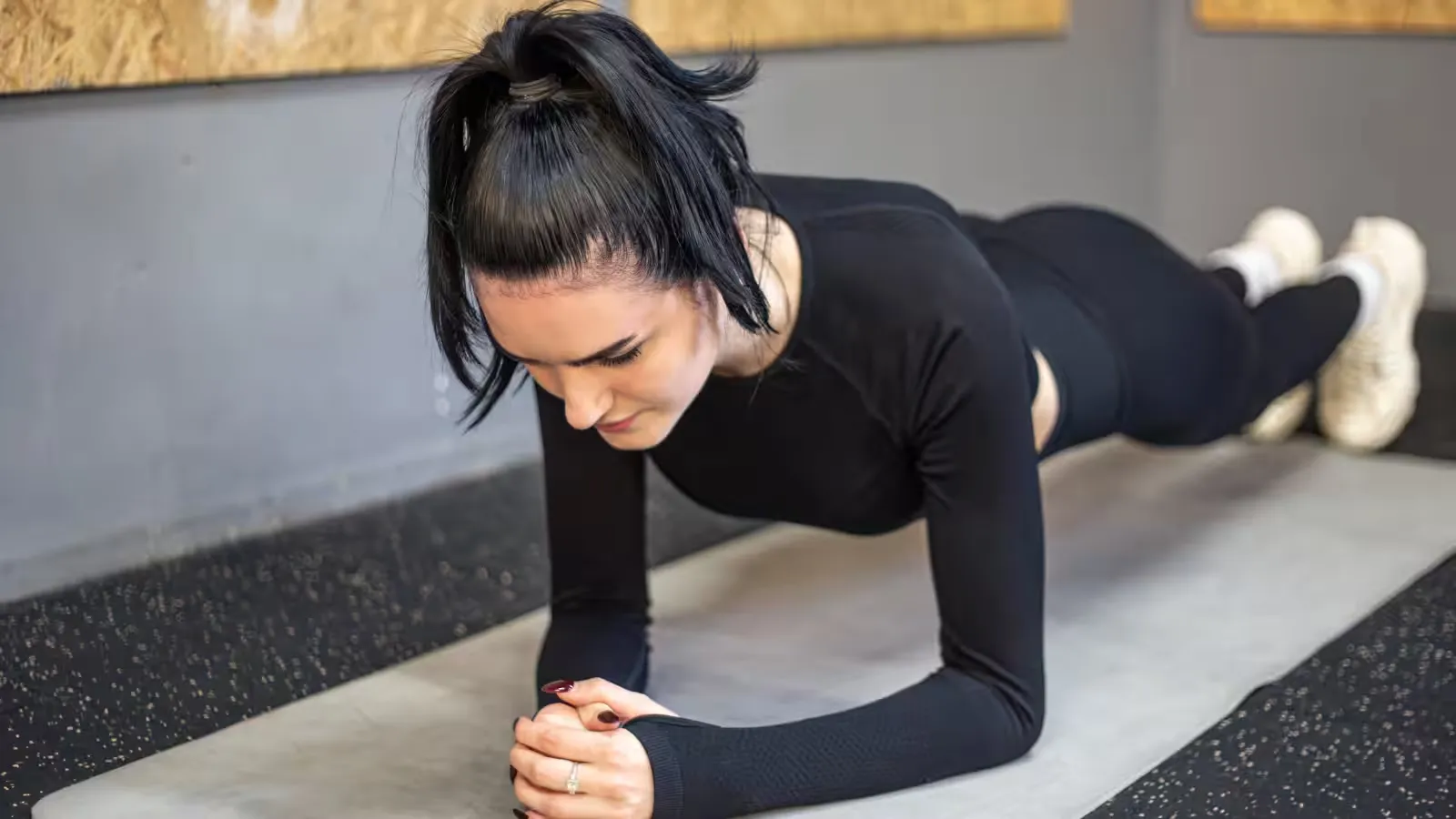
Plank needs no expensive equipment and can be done at home, which is part of its popularity, but the question is whether it alone can melt belly fat.
Which muscles does plank activate
Plank is an isometric exercise, which means the muscles stay active during the exercise but the body is not repeatedly moved. Done correctly, it works the abdominal muscles, the back, the hips and the muscles that keep the body stable. The main muscles activated are the abdominal muscles that help keep the body stable, the deep abdominal muscle called the transverse abdominis that helps keep the torso stable, the obliques on both sides of the abdomen, the back muscles that help maintain posture, and the glutes and shoulder muscles that keep the body in the right position. Strong core muscles help keep the body stable and make everyday tasks easier, so the benefit of plank is not limited to the abdominal muscles alone.
Can plank alone cut belly fat
If the goal is to reduce belly fat, it is important to understand that plank strengthens the abdominal muscles but does not directly eliminate belly fat. Reducing fat from only one part of the body by exercising that part is called spot reduction, and there is not sufficient scientific evidence that plank alone selectively reduces belly fat. To reduce fat around the abdomen, the focus has to be on reducing overall body fat, for which a balanced diet, regular walking or other aerobic exercise and strength training together are more useful.
Plank's role in calorie burn
This does not mean plank is useless for those trying to lose weight. When plank is combined with regular walking, cycling or other physical activity and a balanced diet, it can become a useful part of a fitness routine. Rather than depending on any single exercise for obesity, a routine that can be continued for a long time should be adopted. During plank, muscles stay active and energy is spent, but because the body remains still, the calories burned are usually limited compared to continuous-movement activities like brisk walking, running or cycling. How many calories are burned depends on the person's weight, the duration of the exercise, technique and physical capacity. So merely increasing plank duration is not the most effective weight-loss strategy. Balancing calories spent through physical activity with calories from food helps create a calorie deficit, which is necessary for weight loss.
How long should beginners start with
For beginners, correct technique matters more than holding the position for a long time. Beginners can start with short sets of 10 to 15 seconds as per their capacity, and slowly increase the time if the body position stays correct and there is no pain. The same duration is not necessary for every person. If a normal plank feels difficult, one can start with a wall plank or a modified plank with knees on the ground, and make the exercise harder as strength and control improve.
The right technique
Lie face down on a yoga mat and place both elbows directly under the shoulders. Resting on the toes, lift the body up. Keep the body in an almost straight line from head to heels. Keep the abdominal muscles lightly tight and do not lift the hips too high or let them sag. Breathe normally and do not hold the breath during plank. When it becomes difficult to maintain the correct posture, slowly bring the knees to the ground and rest. Correct technique matters more than holding a plank for a long time, and if back pain starts, stop the exercise and consult a physiotherapist or doctor if needed.
Who should consult a doctor first
People with uncontrolled high blood pressure, heart disease, diabetic retinopathy, hernia, recent abdominal surgery, pregnancy or the postpartum stage, wrist, shoulder or back problems, and severe obesity may find plank puts strain on the wrists and shoulders, so inclined or knee-supported exercises may be better for them, and they should take a doctor's advice before doing plank.