
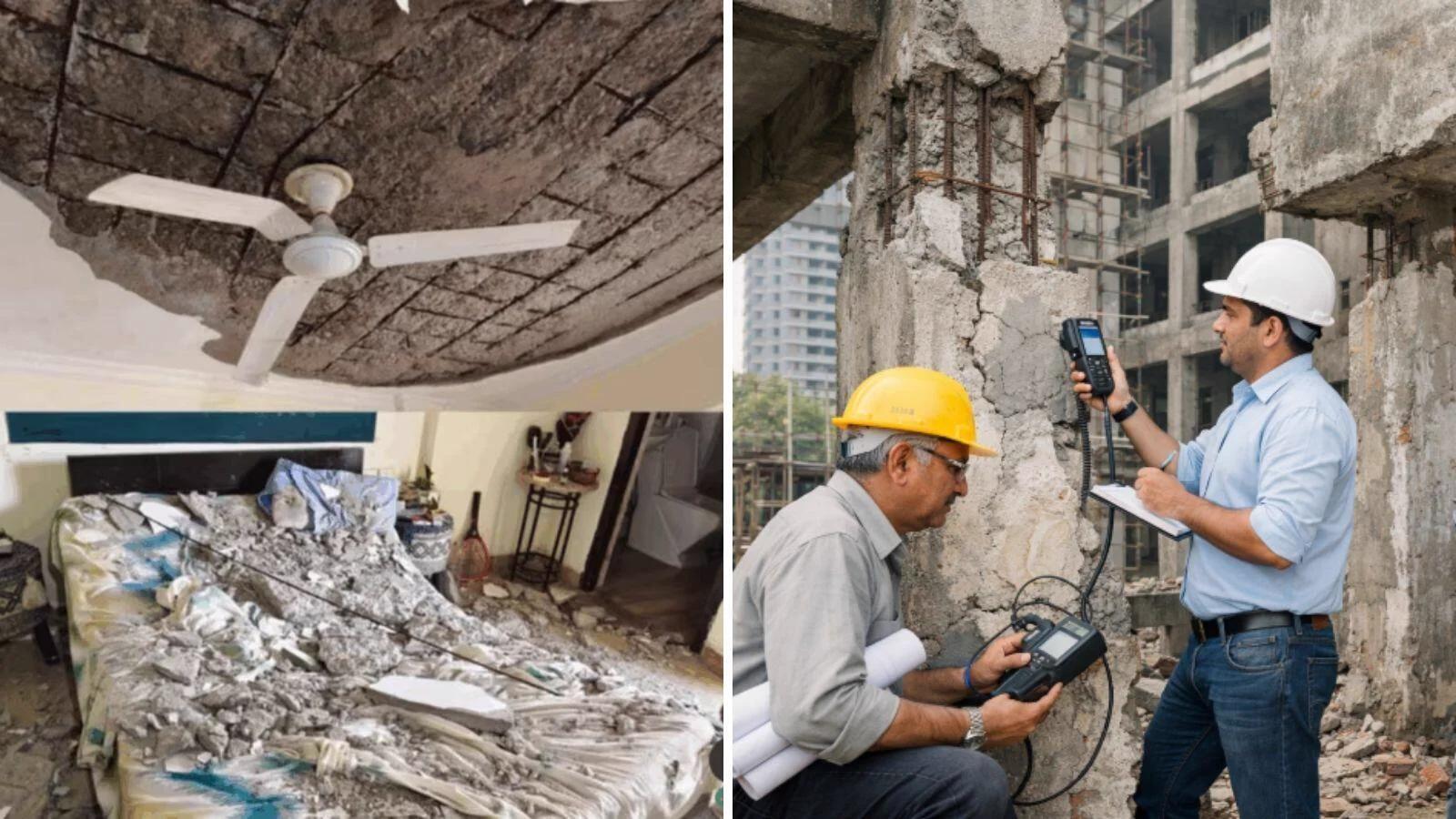
An old flat can look like a bargain: a lower price, an established neighbourhood and a home that is ready to move into. But a building's age hides what paint and furnishing cannot show, such as weakened concrete, rusted steel and water damage inside slabs and beams. A ceiling collapse in Navi Mumbai is a reminder that buyers need to check the structure, the repair record and the redevelopment position before paying token money or signing an agreement.
The incident took place in a flat in Ganga Sagar Society in Koparkhairane, Navi Mumbai. The bedroom ceiling suddenly fell while a couple was in the room. Both were injured and taken to hospital, and the woman's condition was reported to be serious. Pieces of concrete, plaster of Paris and broken iron rods fell with the slab. The exact cause will be known only after investigation, but the case has raised questions about the safety of old buildings and the need for timely repair.
The society is about 28 years old, and redevelopment work had not been carried out there for a long time. In old buildings, water leakage, weakening concrete, rust in iron rods and repairs not done on time can increase risk. The incident shows that buying an old flat needs more than checking price, location and facilities. Buyers should also check the building's condition, structural audit report, society repair records and redevelopment position.
What exactly happened in the flat
The ceiling of a bedroom in the society flat fell without warning while the couple was present. The falling material included the slab, plaster and broken steel bars, and both people in the room were injured. They were admitted to hospital. At the spot, the broken slab, plaster and twisted rods were found. The society had not seen redevelopment work for a considerable time, which is part of the background that investigators will examine.
What makes old buildings risky
With time, water leakage, rust in steel rods, breaking concrete, poor drainage and irregular repair work can weaken any building. A flat that looks good from outside is not a guarantee that the building is safe inside. Hidden cracks or damage in slabs, beams and columns can only be found with expert advice. A fresh coat of paint does not prove strength, and an old building is not automatically unsafe either. The point is to check, not to assume in either direction.
Warning signs owners should not ignore
New, widening or deep cracks in ceilings or walls call for advice from a structural expert, especially when the cracks appear near beams, columns or slab joints. Repeated water leakage and damp patches can weaken concrete and rust steel rods, and dampness can make walls and ceilings weak enough to fall. If concrete starts peeling, steel rods become visible, or pieces fall from the ceiling, that should not be ignored. Expert advice should be taken at once and necessary work should be done.
Difficulty in closing doors or windows, when it appears suddenly along with cracks in walls, can also be a sign of movement or damage in the building. In such a case, a specialist check is needed. Painting over cracks or covering a damp patch is not enough, because it does not remove the real problem. These signs do not by themselves mean a building is unsafe, but they should not be ignored either.
How such incidents can be prevented
Structural audits of buildings should be carried out from time to time under local rules. A competent engineer should be engaged, and defects pointed out in the report should be fixed on time. Where repair work is needed, necessary permissions should be taken before the work is done. No unauthorised changes should be made to ceilings, beams, columns or load-bearing walls. Redevelopment should not wait for an incident; it should be taken up regularly and on time.
What to check before buying an old flat
An old flat may fit the budget, but price alone should not decide the purchase. Before paying token money or signing an agreement, buyers should check several things. The latest structural audit report of the building should be seen, along with whether the repairs mentioned in it have been completed. The repair record should be checked for water leakage, cracks in concrete, major repairs and society maintenance. The redevelopment position should be clear: whether approval has been given or discussion is still under way.
Essential documents should also be verified, including building approvals and, where applicable, the occupancy certificate. If cracks, dampness or other damage are visible, a capable structural engineer should inspect the flat before purchase. Returns from property investment depend on market conditions, project quality, infrastructure and finances, so legal approvals should be checked and a financial expert consulted before investing.